

Our annual East Range Summit took place on May 6 in Aurora, Minnesota, and featured a thought-provoking presentation from our keynote speaker, Deb Brown of Save Your Town.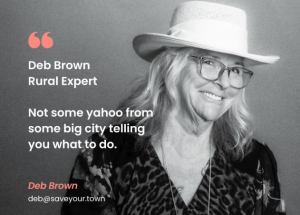
Through her work with Save Your Town, Deb studies small towns across the United States, gathers research and success stories, and shares innovative ideas for revitalizing rural areas.
“We believe small towns can be saved by their own people using their own resources,” shares the Save Your Town website, adding: “We picked the name [Save Your Town] because that is what you are going to do, save your town. No one is coming to do it for you. No factory or big business is going to save you. No outside expert has the one right answer. It’s you.”
Deb’s May 6 presentation was packed with actionable takeaways for starting projects, raising participation levels, and transforming crowds into networks. Here’s a digest of highlights:
- Towns that prosper the best are the ones that are open to new ideas and welcome new people into making decisions about the future of the community.
- Start with a big goal for your community and focus on what will improve the quality of life. The smaller the step, the easier it is to try your idea out first. These small steps are powerful because they are doable. A small test teaches you more than a long debate.
- Move from asking people to serve on committees to inviting them to participate in activities they enjoy. The committee version of development is to study everything forever. The idea-friendly version is to test something together while you keep planning. Once people realize they are the community, they stop waiting for a board or chamber or city hall or someone else to change things.
- Community happens when people talk to each other. People show up when they feel invited, when the idea is interesting, and when they can see themselves in it. Give the whole town ownership over the idea to boost participation.
- The event is the platform, the relationships are the long-term outcomes. If a project doesn’t turn out the way you would have liked, reframe failure as data. Use it to inform the next idea. You don’t have to know all the answers. Your job is to create the conditions where more good answers can emerge.
As part of her three-day visit, Deb toured all four East Range communities with local leaders. We also hosted a dinner where community members had the opportunity to talk with Deb and exchange ideas. To learn more about Deb’s work and explore further resources, visit the Save Your Town website.